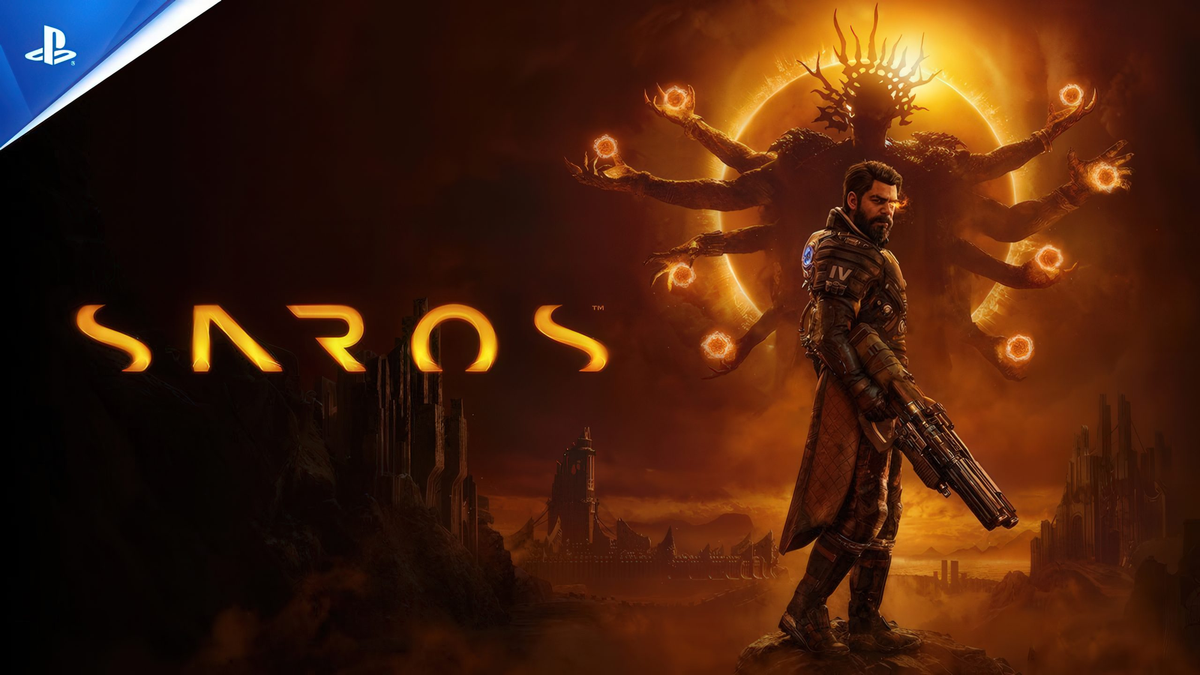
Saros, Give Me the Risk, But Give Me the Contract First
This essay examines Saros’ “death contract”: when Drive hits limit break, Negligence can erase all Lucenite on death. The issue isn’t harsh risk, it’s vague communication. Without clear stakes, a gamble feels like punishment for success.

When a Game Turns Your Best Run Into a Lesson You Didn’t Consent To
Core Thesis
A punishing system is not inherently bad. A brutal risk-reward mechanic can be great. But when a game changes the emotional contract of death without making that change legible, it turns player mastery into player distrust.
In Saros, Drive limit breaking may be thematically elegant — ambition becoming negligence, overreach putting accumulated Lucenite at risk — but if the player does not clearly understand that their entire run payout is now on the line, the system stops feeling like risk and starts feeling like retroactive punishment.
1. My Opening Context: Time Waste, Bloat, and the Mood Going In
Time wasting and padded content bloat fucking sucks to me more and more these days. As I feel the passage of free time is at a premium as a Xenial (born in 1977, still hardcore gaming a lifetime later).
That was already the mood I was in before I sat down to play more Saros. Thankfully, Saros doesn’t over-bloat here, and the action is served up quite masterfully. (Side old ass gamer fist shaking note) Push-to-hold for UI interactions still sucks. I’m a grown-ass person capable of pressing a button a single time for a thing to happen.
Not in a “games should be short” way. I love long games. I love deep systems. I love a run that sprawls because I am making interesting decisions and building toward something. What I have less and less patience for is when a game asks for hours of attention and then retroactively makes that time feel wasted because some crucial piece of the contract was hidden, vague, or under-explained.
What I mind realizing after the fact that I had been playing under stakes I did not understand.
2. The Run: My Agreement With the Game
Usually, when I sit down with Saros, and I’m feeling patient, I make a small agreement with myself, knowing this is the most patient I will ever be in the session, and filled with the learning and processed experience from the previous sessions.
Start from the first level. Build the power curve properly. Maximize how far I can get. Don’t rush. Don’t skip the early-game accumulation. Let the run become something.
That was the plan last night.
And for three and a half hours, I was becoming a monster on this run.
I was playing well. I was building power. I was getting farther than I ever had before. I hit my first attribute limit break. In games, a limit break is where you, as the player, can get the game systems (designed intentionally or unintentionally) to break past the limits of the system. An example of this (in general, not Saros) could be a weapon that, when shooting each bullet that damages an enemy, the bullet regenerates your health (vampirism), and by cranking up your rate of fire, you can out-heal direct damage being done to you by the enemy. At this point, the game could be considered unhinged and potentially broken. After all, if you no longer need to dodge to keep from being damaged, you’ve unhinged the system rules and possibly made your game boring. More on this later.
There was a voice line. There was a tutorial prompt. But the tutorial was obtuse as fuck. Something like “your attribute will no longer be useful,” or some other vague phrasing that did not actually tell me, in plain terms, what had happened.
Maybe there was a warning, and I missed it. Maybe the information was technically present somewhere. But I definitely did not understand the actual stakes.
So I kept going. Today I also Googled to understand what happened (without trying to ruin the surprises the game is yet to give me as I play through Saros). Thank you, Reddit Thread users!
3. The Loss: Three and a Half Hours Gone
I was limit-breaking. I was pushing deeper into the game than I ever had. I reached the boss of Blighted Marsh. Then I died. I had collected more purple resources (11 Halcyon pieces), which was cool because those are the beefier upgrades on the skill tree. Then I looked at the Lucenite penalty for die.
I had earned around 60k Lucenite in that run.
My highest amount ever.
Gone.
All of it lost as the penalty for limit breaking the Drive stat (which I had to Google around for).
That run was three and a half hours.
And my immediate design-brain reaction was:
Why do the designers hate me so much?
4. The Mechanic: Attribute Volatility as Systemic Poetry
From what I found afterward, pushing a core stat beyond its intended cap can trigger Attribute Limit Breaking, or Attribute Volatility.
The reward is obvious: you get powerful. You push beyond normal constraints. You become unhinged inside the system.
But each overextended attribute also creates a corruption-style consequence.
- Resilience creates Arrogance, which makes you unable to see enemy and boss health bars.
- Command creates Ignorance, which reduces your ability to see corruption effects on your armor.
- Drive creates Negligence, which means that if you die during the current cycle, you lose all collected Lucenite.
On paper, I can see the design.
Drive as ambition. Drive as overreach. Drive becomes Negligence. You pushed too hard, became too hungry, and now everything you are carrying is fragile.
That is good systemic poetry.
But systemic poetry does not save a bad onboarding moment.
A beautiful curse that the player does not understand is just a sucker punch.
5. The Real Problem: Legibility, Consent, and Proportionality
The issue is not simply “big penalty bad.”
I like risky systems. I like corruption mechanics. I like when a game asks me to become greedy, reckless, or powerful, and then makes me live with that decision.
The issue is more specific.
Did I knowingly enter a dangerous contract, or did the game smuggle a wager into what looked like normal optimization?
That distinction matters.
My agreement with the game was: start from the beginning, play patiently, optimize the power curve, get farther, and earn more long-term progression.
That is a coherent player strategy. It is not cheese. It is not degenerate. It is not some exploitative edge case. It is me engaging with the game’s systems in good faith.
But somewhere inside that strategy, the game converted my run into a high-stakes extraction gamble.
That can be an awesome design move.
But only if the player knows.
6. The Asymmetry: Drive Is Not Like the Others
The more I think about it, the more important the asymmetry feels.
Resilience volatility removes enemy and boss health bars. That creates uncertainty in combat.
Command volatility obscures corruption information on armor. That creates uncertainty in equipment decision-making.
Drive volatility deletes your Lucenite on death. That creates uncertainty around the entire value of the run.
Those are not emotionally equivalent.
The first two penalties say: “You are stronger, but your tactical read on the world is worse.”
Drive says: “You are stronger, but your time investment may become meaningless.”
That is a different category of punishment.
Maybe that is intentional. Drive might be an economy/power acceleration stat, so its corruption attacks your economy. Fine. There is a clean conceptual mapping there.
But the player’s emotional experience is not clean.
From the designer’s perspective, this might be an elegant risk-reward axis.
From the player’s perspective, it can feel like the game let you have the best run of your life and then confiscated the receipt.
7. The Death Contract
A roguelite teaches you a death contract.
Every game has one.
Sometimes the contract is brutal: die and lose everything.
Sometimes it is soft: die, keep some currency, unlock permanent upgrades, and come back stronger.
Sometimes it is hybrid.
But once the player understands that contract, every run is emotionally shaped by it.
In Saros, Lucenite seems to be part of the emotional cushioning around death. Even if you die, you are still progressing. You still bring something back. Death hurts, but it does not nullify the run.
Drive volatility changes that contract.
Now death can erase the consolation prize.
That is not automatically bad. In fact, it can be great. But when a game changes its death contract, it needs to make that moment loud as hell.
Not subtle. Not buried in a vague tutorial narrative translation layer, language that is artistic narrative. Not phrased in a way that the player can only decode after the damage is done.
It needs to say:
You have triggered Negligence. If you die now, all carried Lucenite will be lost.
And ideally, it needs to keep saying it.
Put it on the HUD. Change the Lucenite display. Make the number pulse red. Add an extraction reminder. Give me a “cash out or continue” beat. Make the run feel transformed.
Because that is what happened. The run transformed. The game just did not make sure I understood that transformation.
8. The Run Became an Extraction Game Without Telling Me
This is the part that actually fascinates me.
Drive volatility may secretly be an extraction mechanic.
Once your Lucenite is at risk, the question is no longer just:
Can I beat the next room?
The question becomes:
Should I leave now?
That is a beautiful question.
It reframes the whole run. It turns power into temptation. It turns success into danger. It turns the player’s best run into a psychological test.
How far will you push?
How much is enough?
Are you still playing skillfully, or are you drunk on momentum?
That is all excellent design territory.
But again: the player has to know that is the game they are now playing.
Otherwise, the game does not feel like it asked me, “Are you brave enough to risk everything?”
It feels like it said, after the fact, “You should have read the fine print.”
Those are radically different emotions.
9. Protecting the Progression Curve vs. Honoring the Player’s Story
I can see the possible designer motive here.
If I return from a run with 60k Lucenite, maybe I wipe out the skill grid for that boss or region. Maybe that breaks the pacing. Maybe the designers do not want a single epic run to flatten the long-term progression curve.
And I get that.
Permanent progression economies are fragile. If players can grind patiently, snowball hard, and come home rich, they can unhinge the intended curve. Designers often need sinks, caps, risk mechanics, or diminishing returns to keep the game from collapsing into “one mega-run solves everything.”
But then the question becomes:
Are you protecting the economy at the cost of the player’s best story?
Because from a player-story perspective, my run had a great arc.
I was patient. I built power. I hit a system edge. I pushed farther than ever. I reached a new boss. I died, but I came home with a huge haul.
That could have been legendary.
Instead, the game turned it into: you got nothing because you crossed a threshold you did not understand.
That is a harsh tonal choice.
When players unhinge your system through mastery, patience, grind, or luck, those moments should often become celebrations. Dangerous celebrations, sure. Risky celebrations. Maybe even doomed celebrations.
But celebrations.
The game should say: “Holy shit, you broke through. Now the stakes are higher.”
Not: “You broke through, so we’re taking your paycheck.”
10. A Better Version of the Same Mechanic
I do not think the underlying idea is bad.
I actually think the idea is strong.
Overclock your stats. Become absurdly powerful. Trigger a corruption effect. Keep pushing, but now you are in danger of losing something meaningful.
That is good. That can actually be the exciting stories you trade with your friends because games should make you feel clever through the expression of skill, patience, and discovery of rule-bending design ideas. In fact, hate them or love them, Poncle game system designs have lessons here to be learned, and no, you can’t learn them until you’ve actually paid your dues to understand the machine. It’s like saying cool, god mode cheat enabled, now what?
The problem is how the contract is communicated and staged.
A better version might look like this:
Drive Limit Break: Negligence Your Lucenite is now unstable. If you die before extraction, all carried Lucenite will be lost. Continue for increased rewards, or return now to bank your gains. Even better: Lucenite is unstable. Each completed room increases your Lucenite multiplier. Death loses it all. Boss victory banks it.
Now the penalty is not just punitive. It becomes a push-your-luck engine.
The player sees the bag. The player sees the danger. The player sees the upside.
That creates drama.
And it gives the player authorship over the disaster.
If I keep going and lose everything after that warning, I may still be pissed. But I am pissed at myself too. I made the call. I wanted the glory.
That is very different from dying and realizing I had unknowingly been gambling the whole time.
11. Pressure Test Questions
These are the design questions I keep circling:
When a player’s patience breaks the intended progression curve, should the game punish that, celebrate it, or transform it into a new risk layer?
When is “cash out now” an exciting decision, and when is it just a hidden tax on not knowing the system?
Should all limit break penalties be emotionally equivalent, or is it okay for one stat to carry a much harsher meta-progression consequence?
If one penalty threatens moment-to-moment combat and another threatens hours of accumulated progression, are those really part of the same system?
- Is it okay for a game to let a player accidentally enter a fail-state economy?
- How loud does the game need to be when the death contract changes?
- Can a mechanic be thematically perfect and still experientially cruel?
- When a player has their best run ever, what responsibility does the game have to preserve that run as a meaningful story, even if the player dies?
And maybe the biggest one:
- If the player’s best run ends in a devastating lesson, did they learn “I was greedy,” or did they learn “the game withheld the real rules”?
Because those are not the same lesson.
One creates mastery.
The other creates distrust.
12. Where I Land, For Now
I do not think the designers literally hate the player.
I think they may be chasing a philosophy where mastery lives close to punishment. Where greed and ambition become dangerous. Where the game lets you become unhinged inside the system, but demands that you carry the consequences.
I like that philosophy.
I like games that let me overreach.
I like systems that ask, “Are you sure?”
But I want the game to actually ask.
Not imply. Not mumble. Not bury it in vague world narrative almost tutorial language (corruption).
Ask.
Because when a player breaks through the normal power curve, that should be a charged moment. It should feel like stepping across a threshold. Sirens should go off. The UI should shift. The player should know: we are in a different kind of run now.
That is the design opportunity.
Limit breaking should not just be a stat event.
It should be a ritual moment.
A moment of celebration.
A moment of danger.
A moment where the game says: You got here. You were not supposed to be this strong. Now decide what kind of player you are.
That is the version I want.
Not padded time. Not hidden punishment. Not three and a half hours turned into a lesson I did not know I was signing up for.
Give me the risk.
Give me the corruption.
Give me the brutal consequence.
But give me the contract first.
Also, great game, https://housemarque.com/ really are swinging for the fences. I've been a fan of their work since the late 1990's. They are deep stewards of what makes great tight action arcade gamepaly tick, and that is where I personally love gaming the most.